The main signs of a slab leak
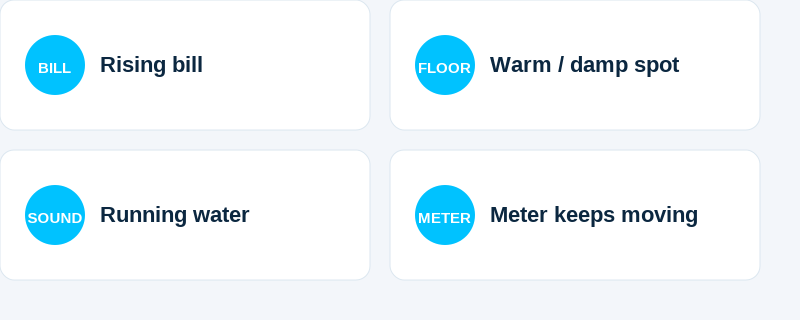
- A water bill that suddenly rises even though your usage has not changed.
- Warm spots on the floor — one patch feels warm underfoot, often from a leaking hot water line.
- The sound of running water when every tap, shower and appliance is off.
- Damp carpet, lifting flooring or a musty smell with no spill or flood to explain it.
- Low water pressure across the house as water escapes below the slab.
- Cracks in flooring or walls, or pooling water near the foundation.
One sign on its own can have another cause. Two or more together are a strong reason to get the location checked properly.
What causes slab leaks?
In Anaheim, many homes sit on concrete slabs with copper water lines underneath, and in older neighbourhoods some of those pipes have been in the ground for decades. Common causes include:
- Pinhole corrosion in copper pipe, made worse over time by hard water.
- Abrasion where a pipe rubs against concrete, gravel or fittings as it expands and contracts.
- Soil movement shifting the slab and stressing the lines beneath it.
- High water pressure wearing pipes and joints faster than they should wear.
How is a slab leak found?
A proper inspection does not start with breaking concrete. Detection specialists confirm a leak with pressure testing, then narrow the location with acoustic listening equipment and thermal imaging, which shows temperature changes across the floor above a hot water leak. Only once the spot is pinpointed does it make sense to talk about opening the slab.
Our full service page explains the process step by step: slab leak detection in Anaheim.
What does fixing a slab leak typically cost?
Finding the leak comes first: slab leak detection typically falls in the market range of $150 to $500 for a normal home, with hard jobs reaching about $700. Repair costs then depend on the method — typical Orange County market ranges are $1,500 to $4,000 for a spot repair through the slab, $2,000 to $4,500 for a reroute, and $5,000 to $15,000 for a whole-house repipe. These are typical market ranges only, not fixed quotes — your own job is quoted individually in writing after the inspection.
What to do if you recognise these signs
- Note which signs you have seen and when they started.
- Check whether the sound of running water continues when everything is switched off.
- Do not ignore a rising bill — under-slab leaks tend to get worse, not better.
- Call a leak detection specialist to confirm the exact location before any repair work.
Think you may have a slab leak in Anaheim or Anaheim Hills? Call (714) 872-5461 or use the form below.
Slab leak sign FAQs
How long can a slab leak go undetected?
Weeks or months. Many are only spotted when the bill rises or flooring starts to lift.
Can a slab leak damage my foundation?
Over time, escaping water can erode soil under the slab and damage flooring and walls, so early detection matters.
What is the first thing I should do?
Confirm it is really a leak and find its exact location with non-invasive testing — then decide on the repair with the facts in hand.
Slab Leak FAQs
Can a slab leak damage my foundation?
Over time, yes. Water escaping under the slab can erode the soil supporting it and damage flooring and walls above. That is why the signs are worth acting on early, while the repair is still small.
How do you find a slab leak without tearing up the floor?
We combine pressure testing, acoustic listening and thermal imaging to pinpoint the leak first. Only the confirmed spot needs opening for a repair.
Should I call a plumber or a leak detection specialist first?
Detection first. Knowing the exact location before anyone opens the floor keeps the repair small and the price honest — and the same team can then carry out the repair.